Aldo Tura, Italian (1909-1963)
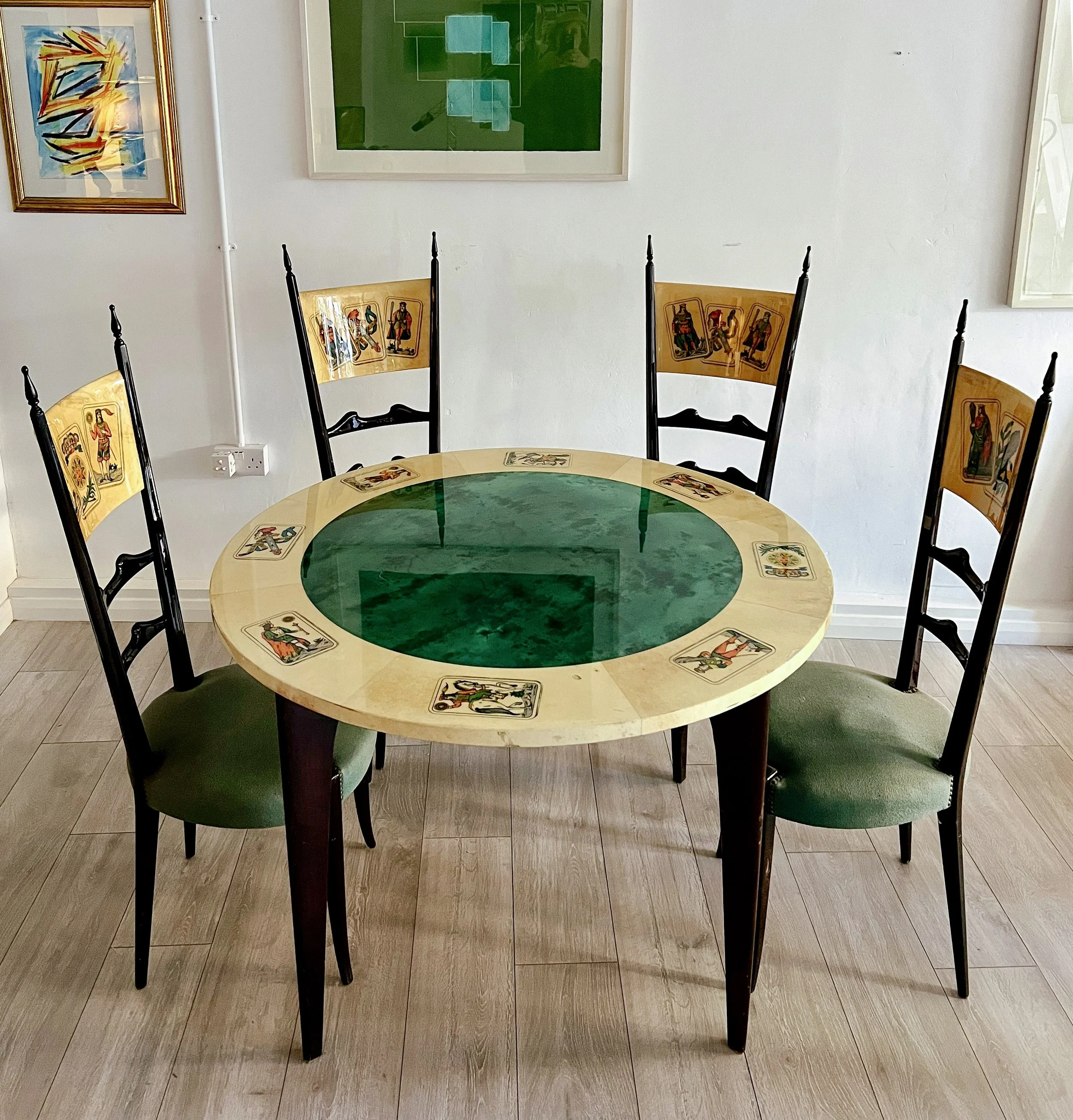
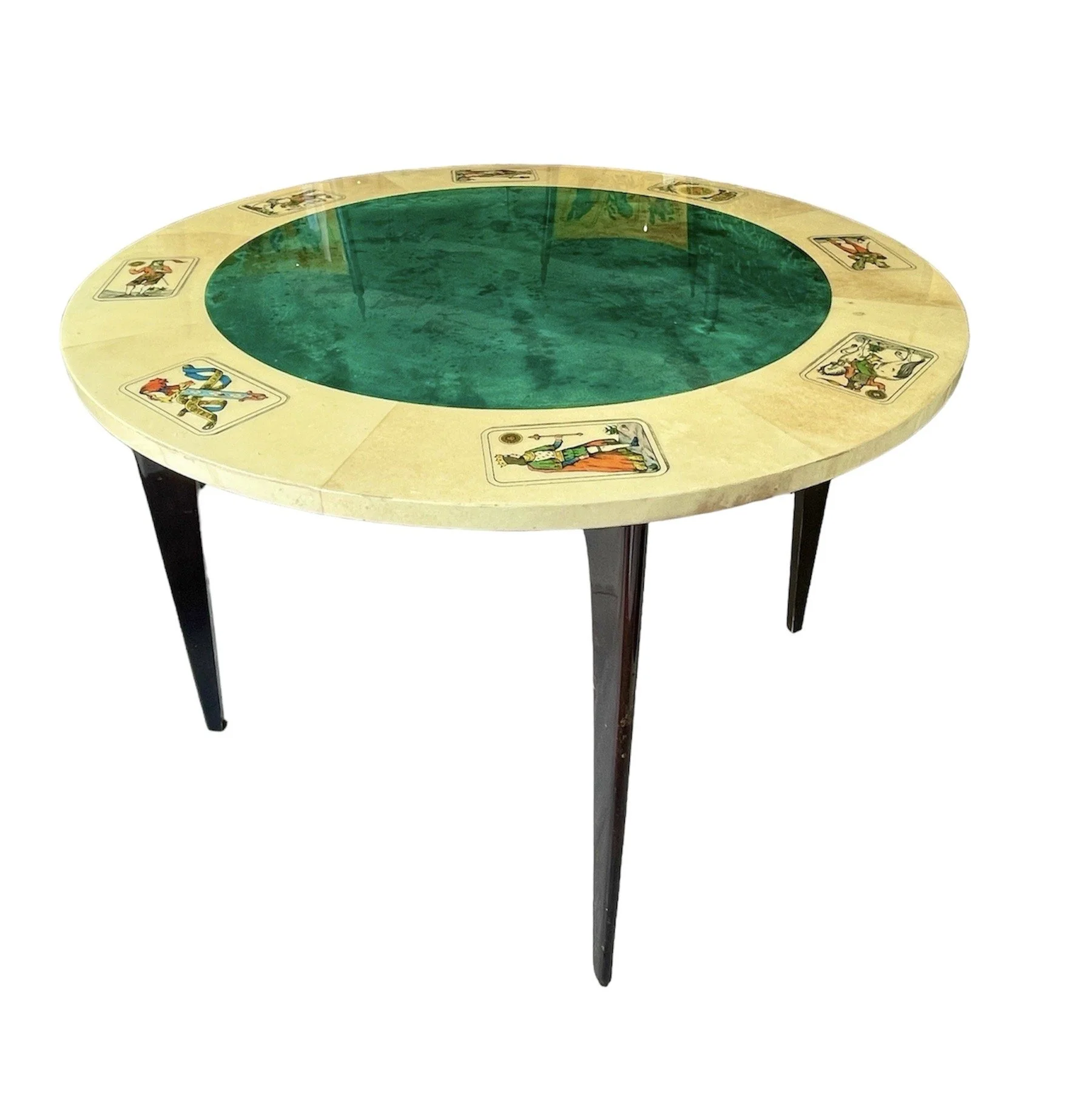
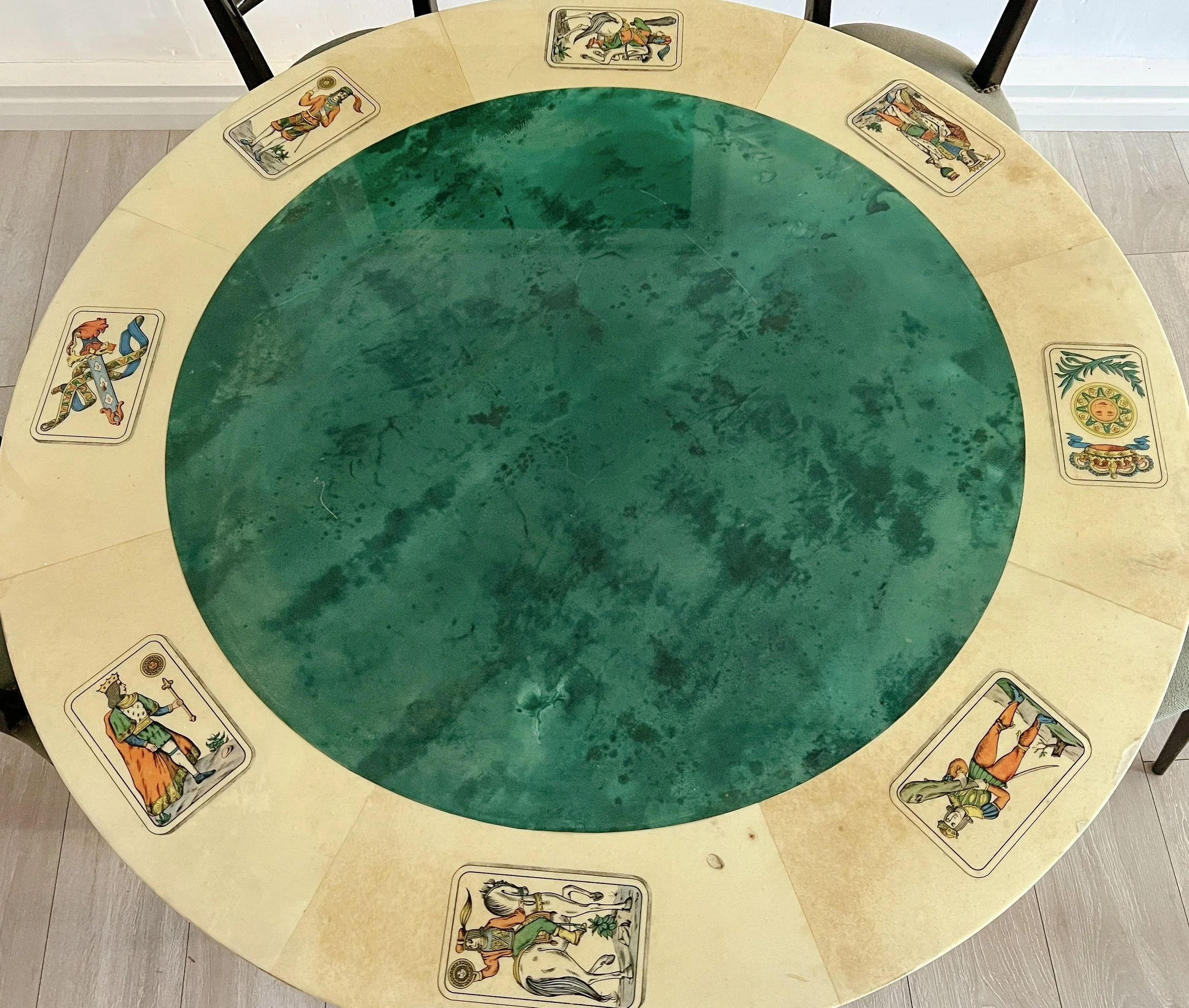
A Card Table in emerald green with 4 accompanying chairs


Born in 1909, Italian designer-maker Aldo Tura established his furniture production house in Lombardy in 1939. Working between the idioms of Art Deco and modernism, Tura created singular, high-end furniture and accessories that were typified by rich materials, sculptural forms, and high-end, artisanal techniques. Tura’s work has become highly collectible, especially examples with exotic finishes— like eggshell, goatskin, and parchment—in intense palettes of red, green, and yellow.
Aldo Tura is a master of mid 20th century Italian design. Using traditional furniture making techniques he worked with the most interesting materials , most notably parchment . From his workshop in Lombardy he produced the most exceptional hand painted furniture like this exquisite card table and four chairs
Tura was one of the most unique design talents of the Italian midcentury. In the postwar years, as many furniture producers were adjusting their production methods toward mass production, Tura remained committed to slow, traditional hand craftsmanship. He favored intricate, complex forms and labor-intensive processes that could never by replicated in a large-scale factory system. As a result, the number of works by Tura available on the vintage market remains limited