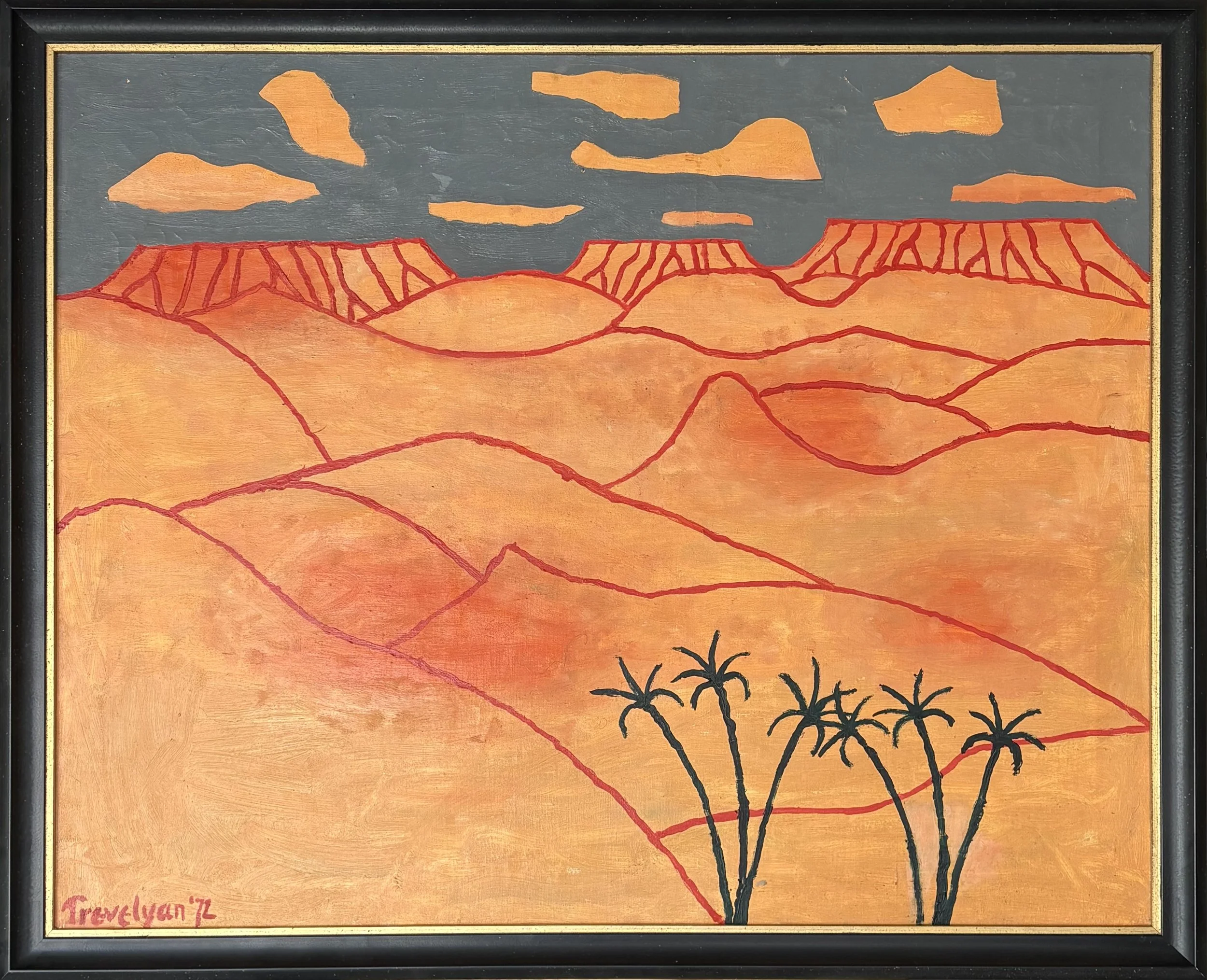
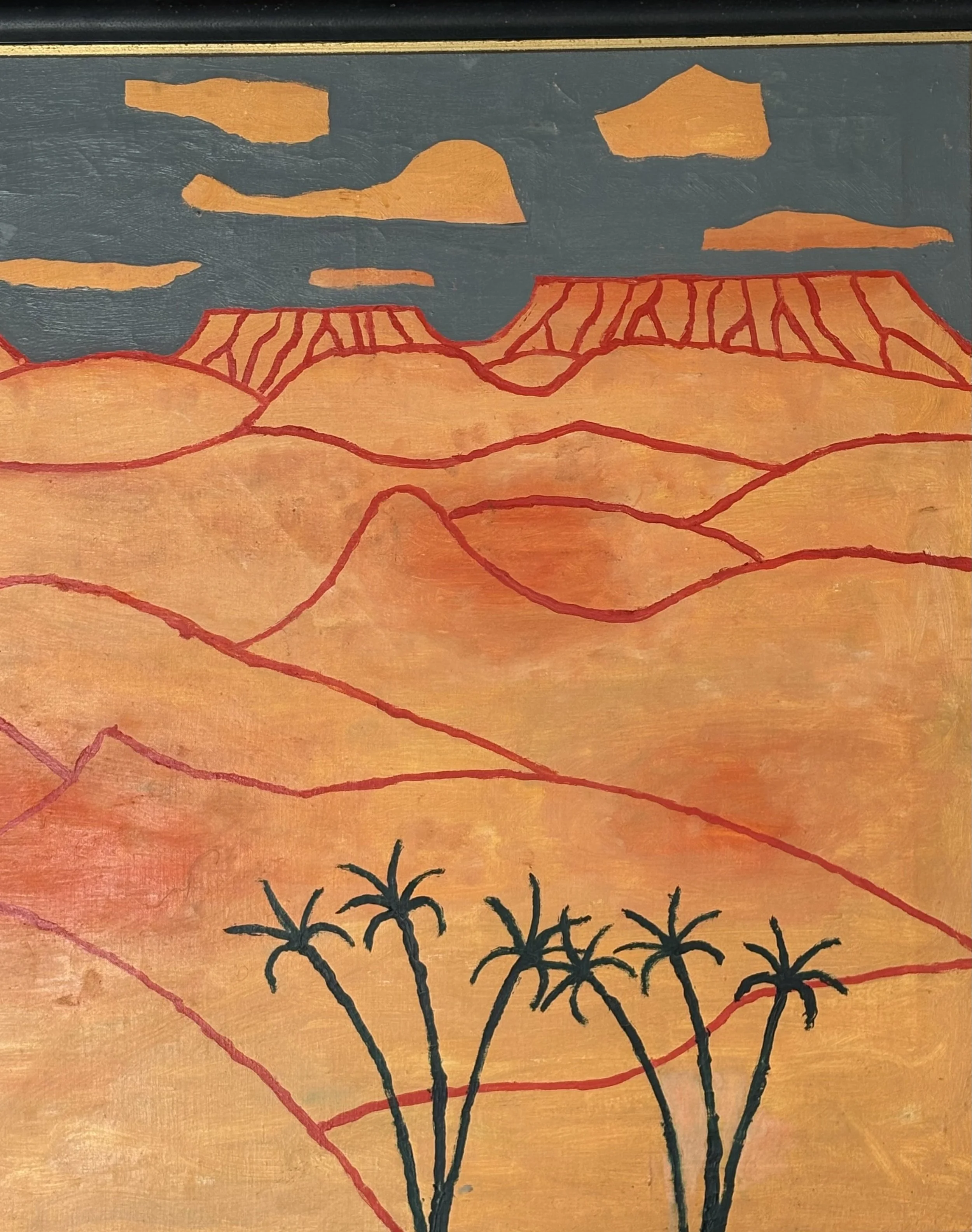
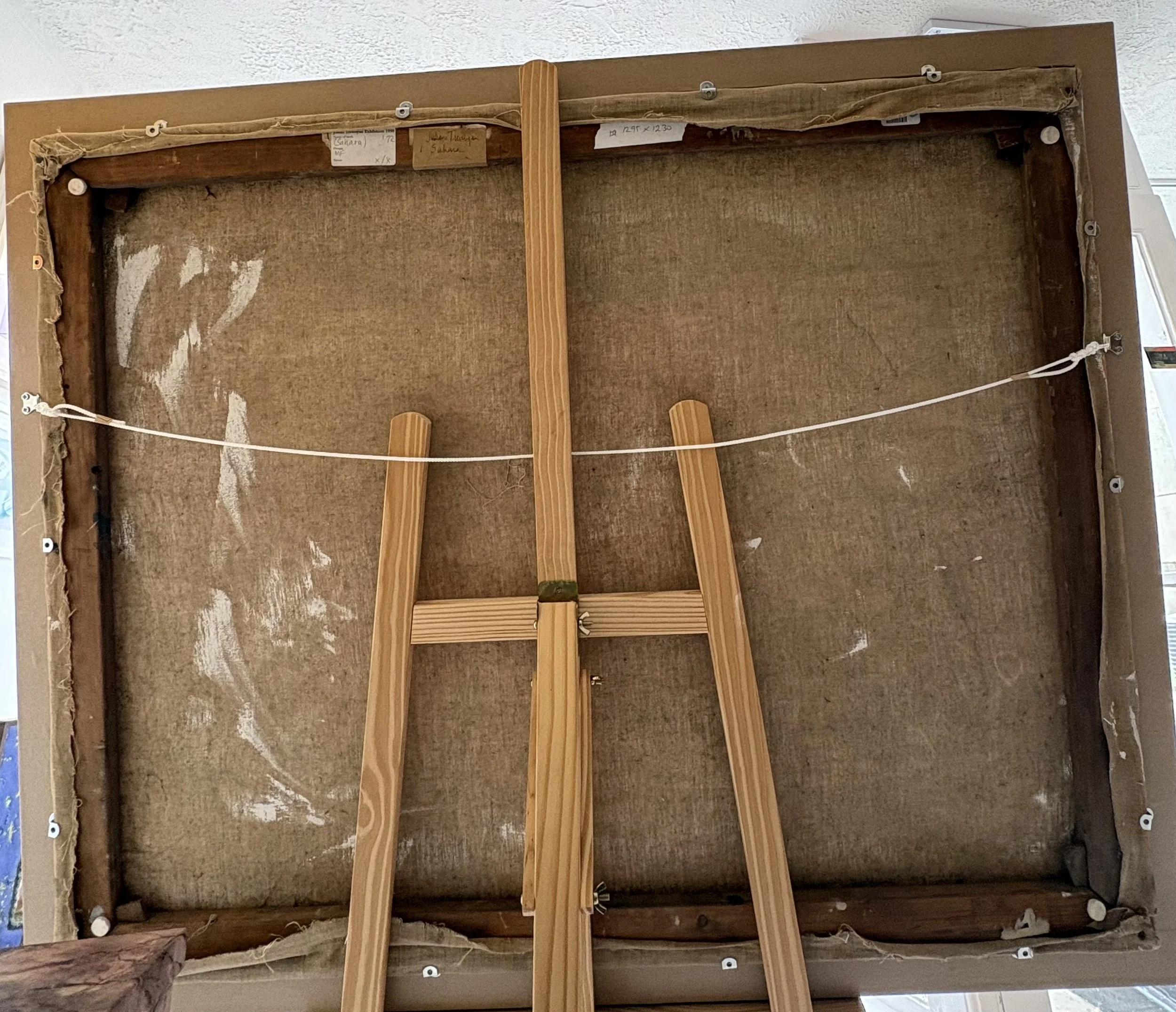
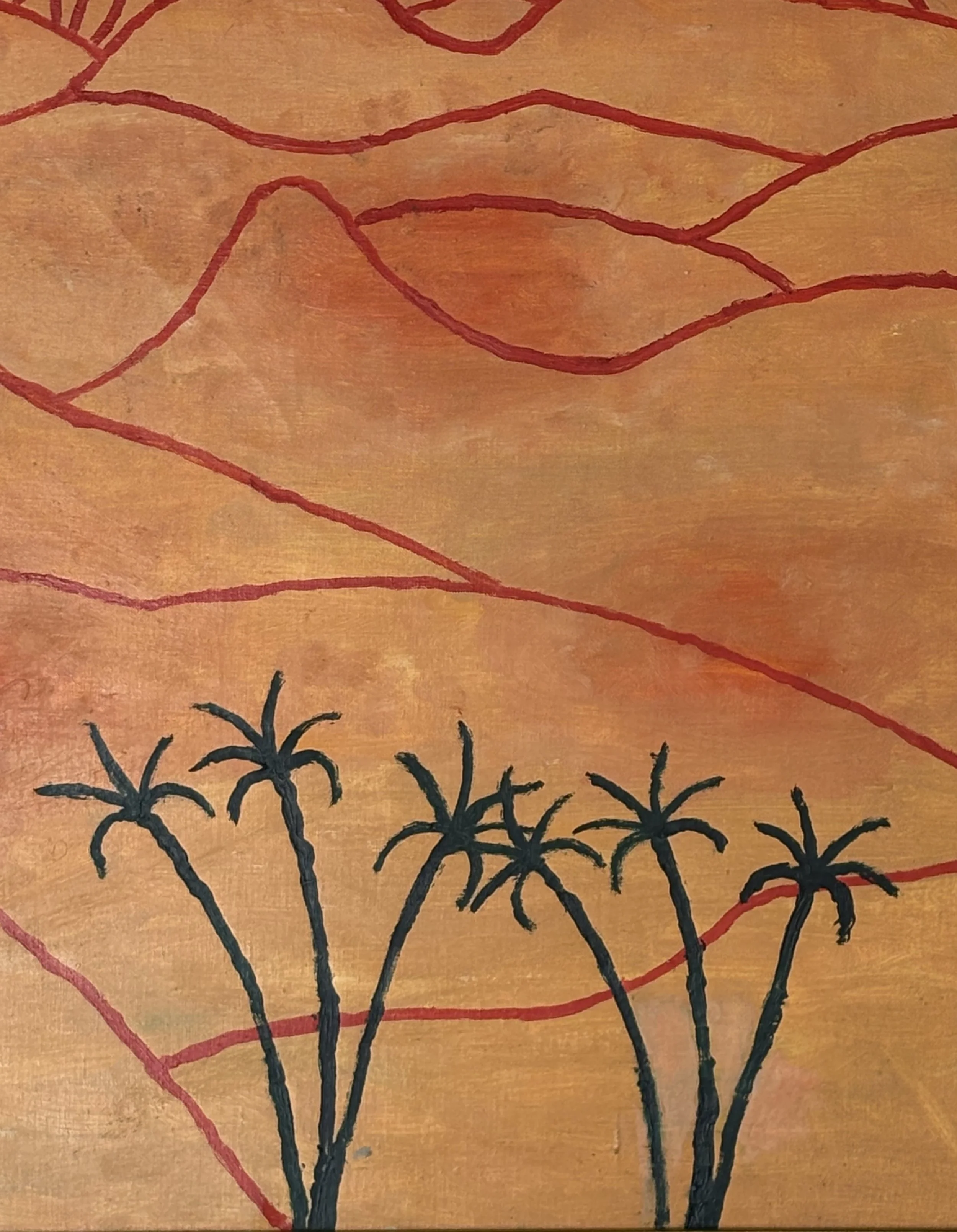
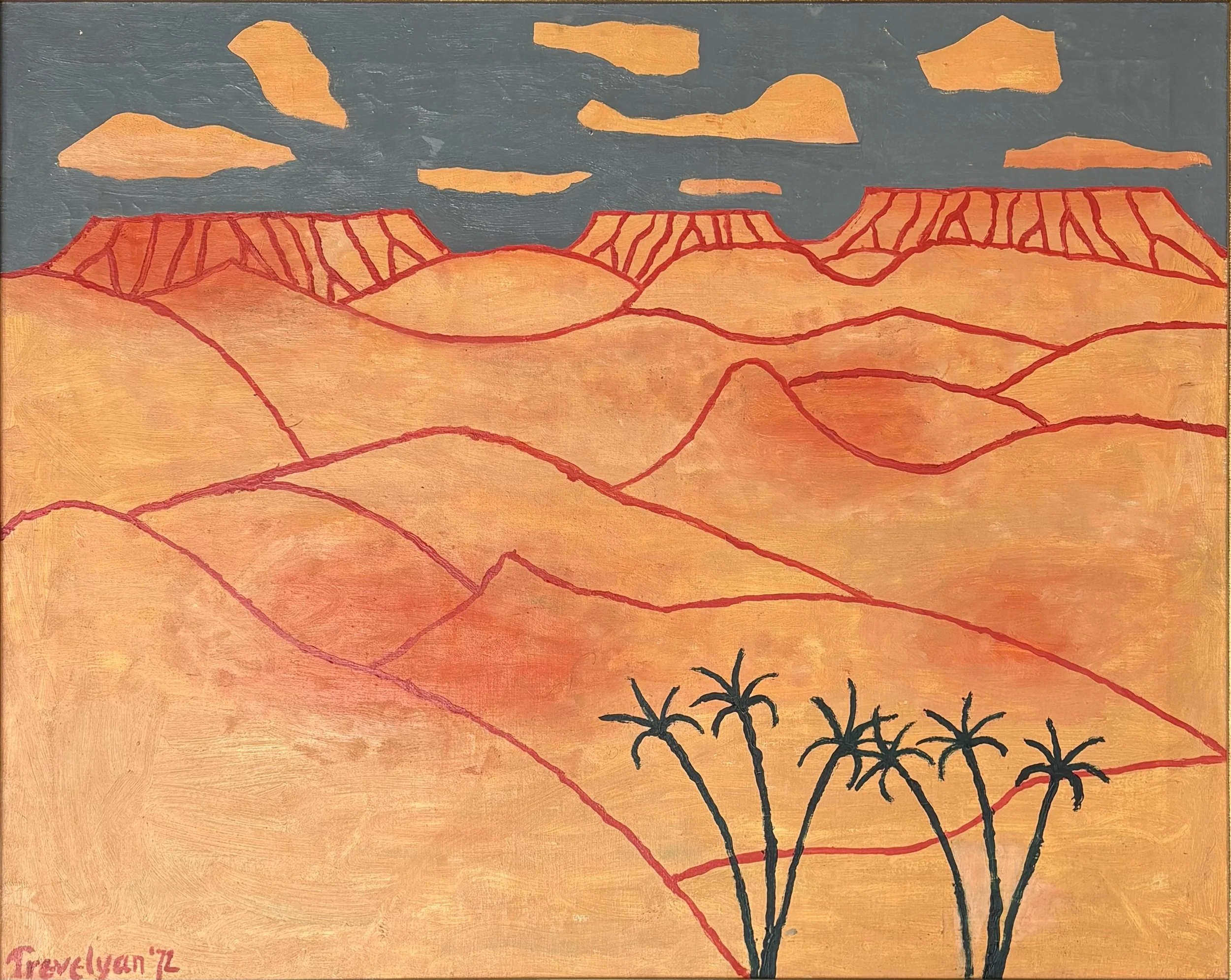
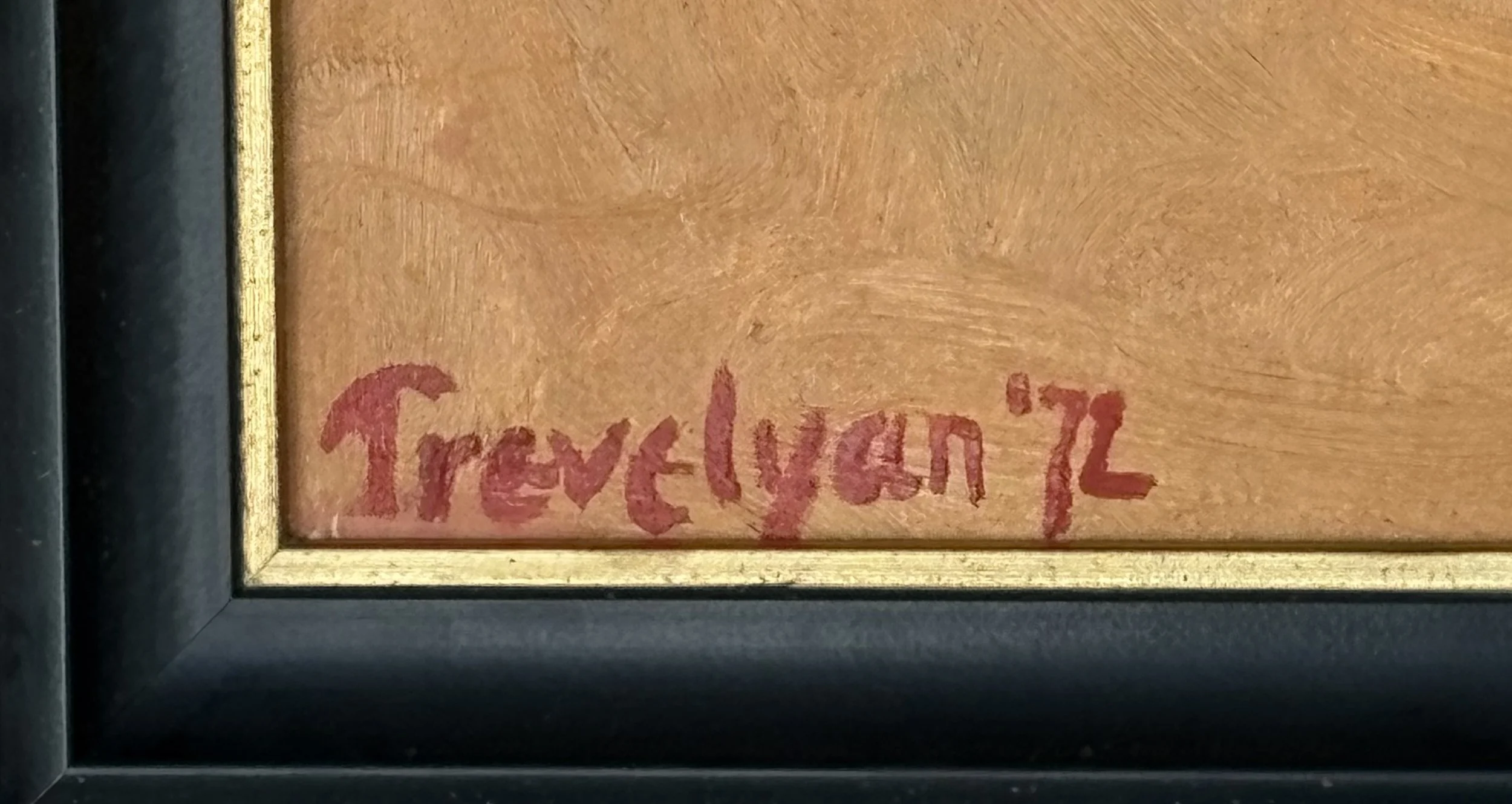
Julian Trevelyan, British (1910 – 1988) 'Sahara' Oil on canvas, 1972 110cm wide x 90cm high x 4cm deep
Julian Otto Trevelyan RA (20 February 1910 – 12 July 1988)
'Sahara' painted in 1972 was exhibited in the Royal Academy and was acquired directly from the Artist's estate through his son Philip
Trevelyan's first solo exhibition was at the Lefevre Gallery in 1937.His work has been exhibited at Waddington Galleries (commissioned a series of etchings), New Grafton Gallery, Bohun Gallery, River and Rowing Museum in Henley-on-Thames, the Bloomsbury Gallery, Messum's, the New Burlington Galleries in London, and Pallant House Gallery, Chichester, among other places.
In 1998 a major Retrospective "Julian Trevelyan: The Imaginative Impulse" was held at the Royal College of Art which subsequently toured to Royal West of England Academy, Bristol; Laing Gallery Newcastle, and Mercer Art Gallery, Harrogate with accompanying catalogue published by Bohun. Catalogue Raisonne of Prints edited by Silvie Turner launched at Royal Academy.. 'Julian Trevelyan Retrospective of Etchings' at Bohun Gallery with opening of River & Rowing Museum mounting 'Julian Trevelyan: River Thames Etchings'.
To celebrate the centenary of his birth, an exhibition of his prints was held at Pallant House Gallery in Chichester from 10 May to 13 June 2010105 of his artworks are now held in the collection of the Tate Gallery.Trevelyan recorded some of his experiences in his book Indigo Days, MacGibbon and Kee, London, 1957.
Bohun Gallery held a major retrospective of the artist's work "Julian Trevelyan: Picture Language" 23 April - 1 June 2013, which included previously unseen paintings and etchings.The exhibition launched the new monograph on Julian Trevelyan, written by his son Philip Trevelyan.
Along with other artists such as Roland Penrose, during the Second World War, Trevelyan served as a Camouflage Officer. He was a member of the Royal Engineers from 1940 to 1943, serving in North Africa and Palestine. You cannot hide anything in the desert.Arriving in the "Western Desert" town of Tobruk, North Africa, Trevelyan realized that standard British army green and brown splotches were ineffective as desert camouflage. He and the other camoufleurs, working under Hugh Cott and Geoffrey Barkas, became expert at desert camouflage and deception. By 1942, they were able to deceive the German Afrika Korps, creating a dummy army which successfully tied down German forces, while real tanks were concealed or disguised as trucks and other equipment.