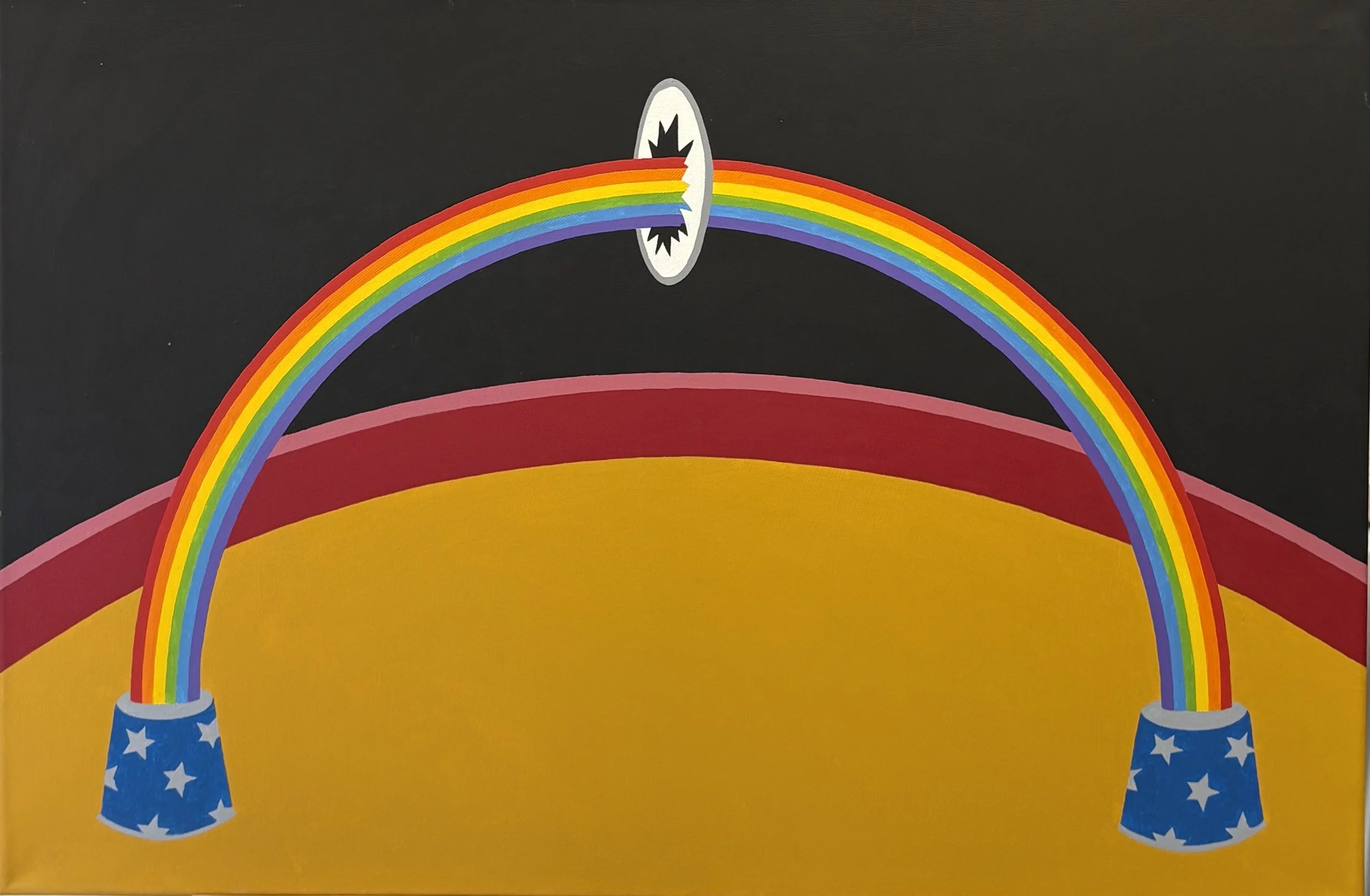
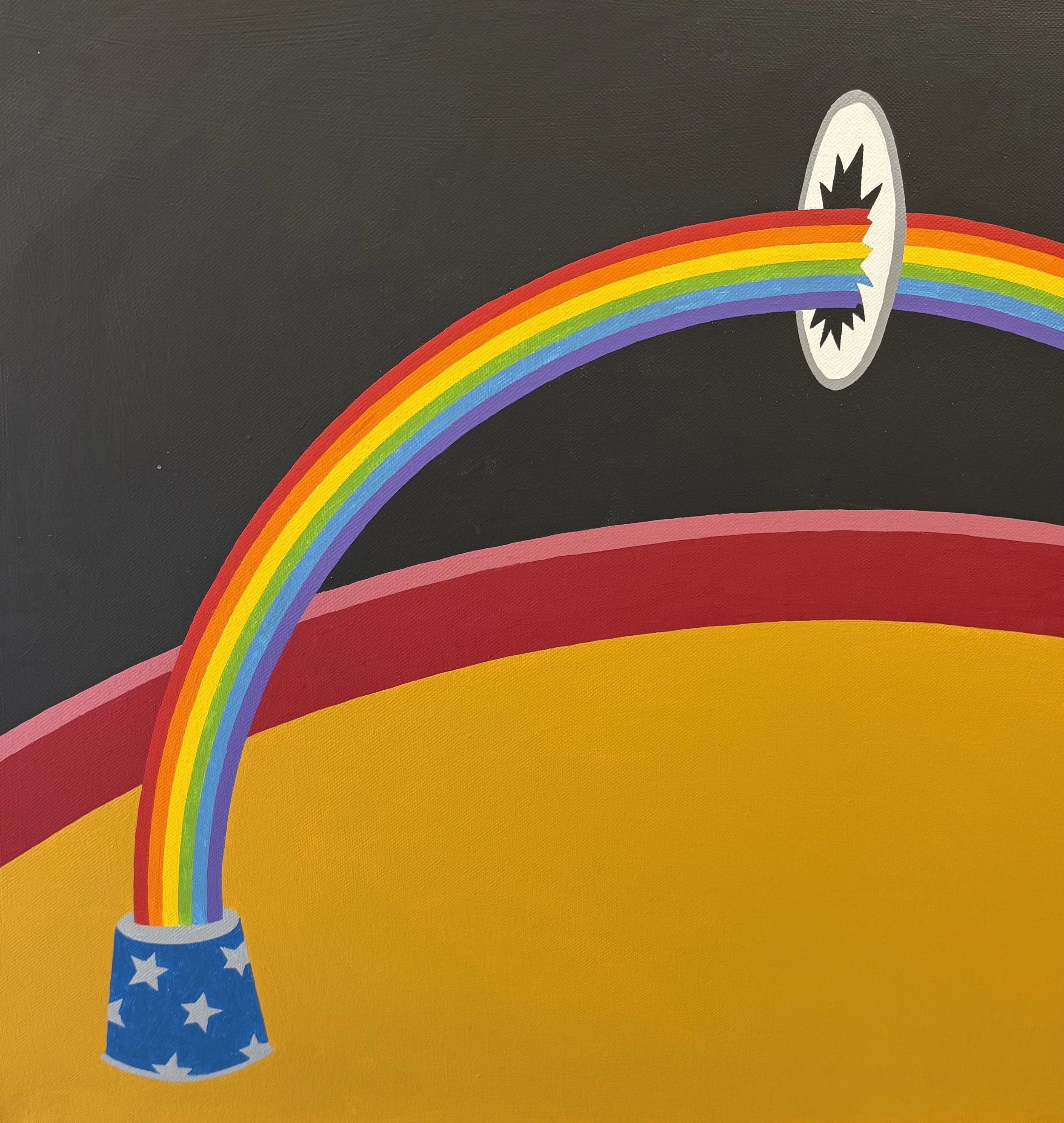
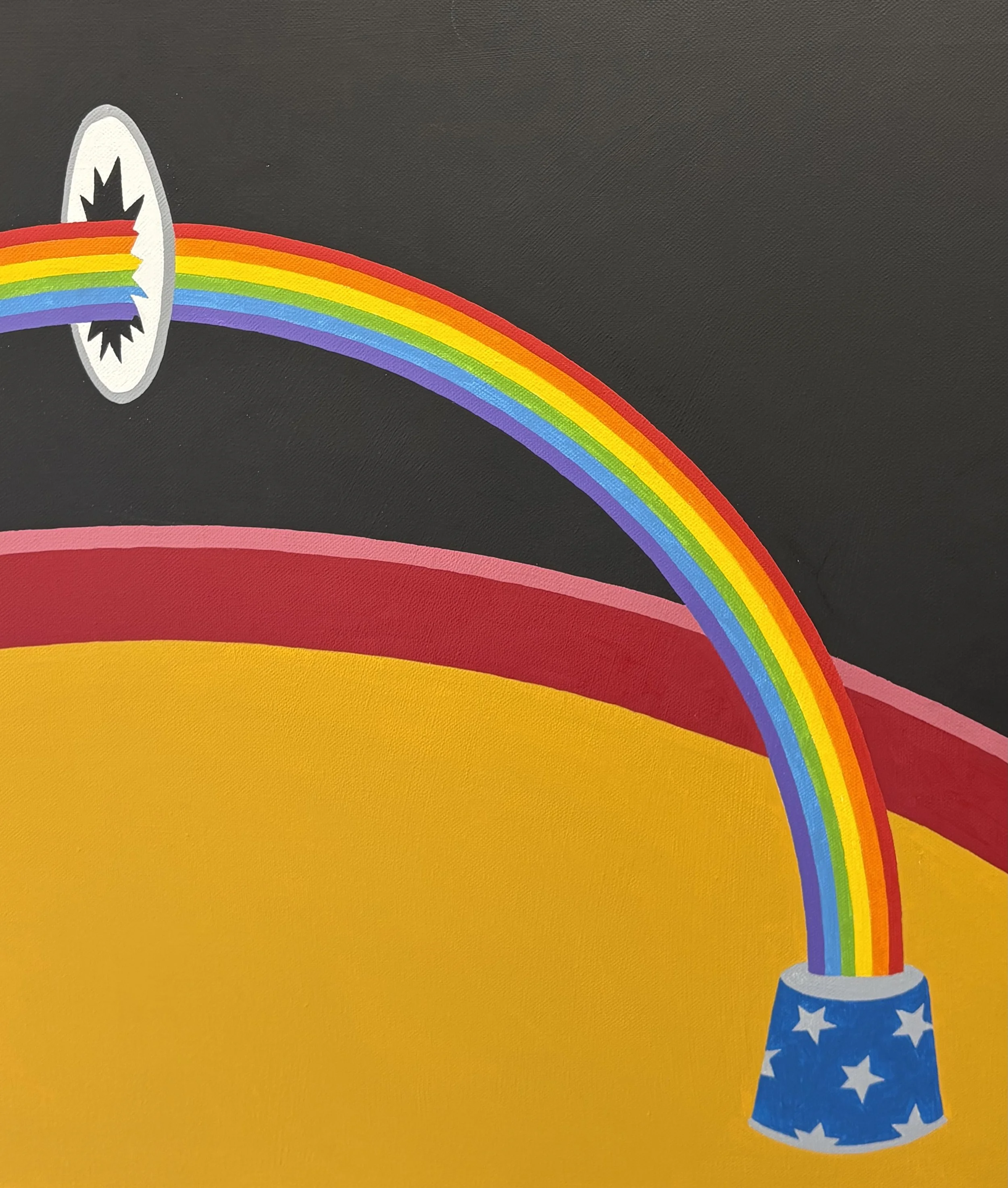
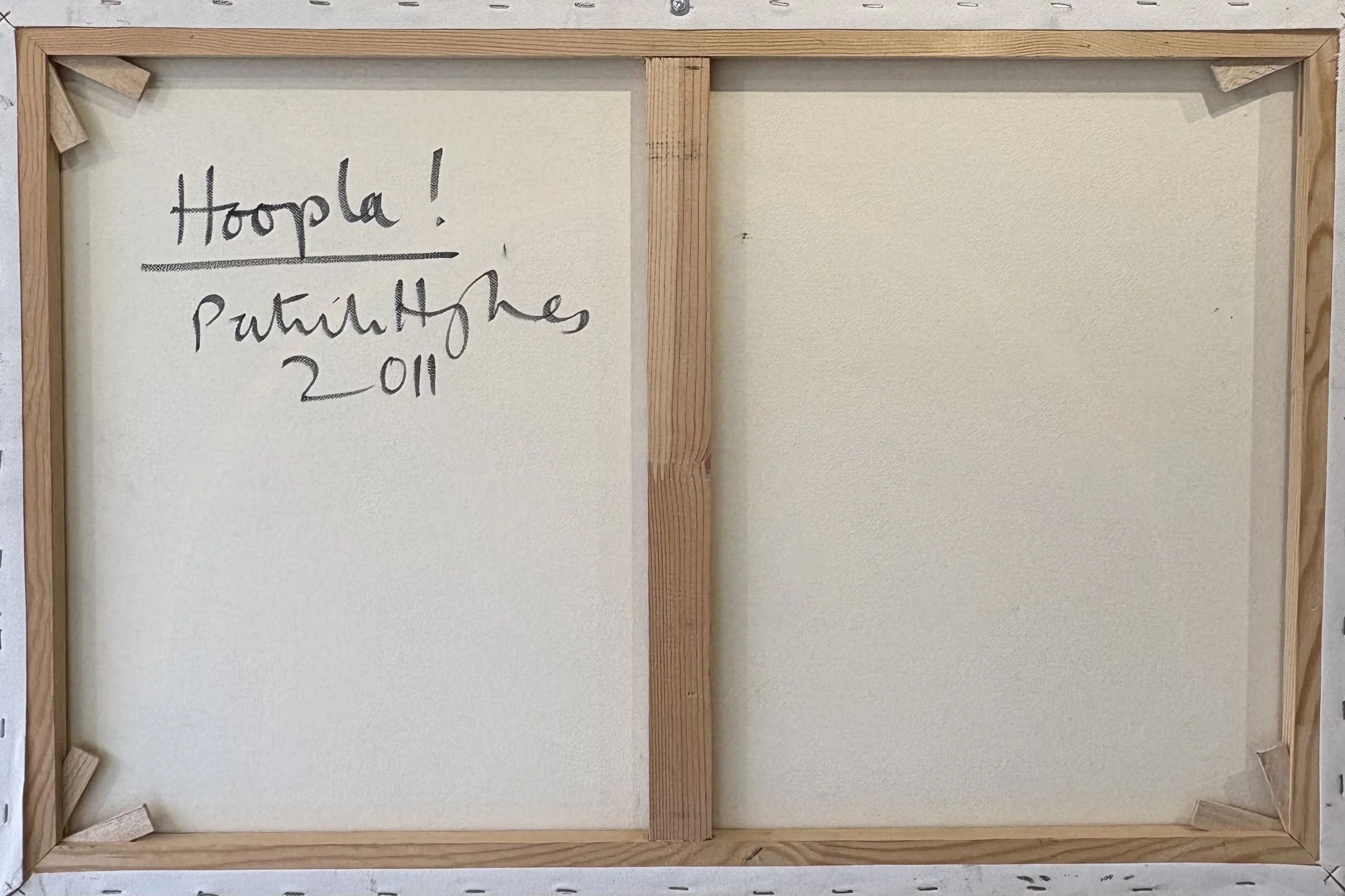
Patrick Hughes (British , b 1939) Acrylic on canvas, ‘Hoopla’ £1800
Patrick Hughes
Patrick was born in Birmingham, England in October 1939. His first exhibition was in 1961 and his first reverspective, Sticking-out Room, was made in 1964. Hughes' original painted reliefs are concerned with optical and visual illusions, the science of perception and the nature of artistic representation. He has written and collated three books on the visual and verbal rhetoric of the paradox and oxymoron. He has made a hundred editions of screenprints and made more than a hundred editions of multiples.
Patrick’s ‘relief’ reverspective paintings, together with his rainbow works, have become hugely popular due their playful and intriguing nature, and Surrealist edge. Today, Patrick’s art is shown in the collections of London’s most prominent institutions, from The British Library to Tate Modern, and continues to show in exhibitions throughout the world. The artist-come-author has also produced a number of books, including Vicious Circles and Infinity, Upon the Pun, Dual Meaning in Words and Pictures and Paradoxymoron and Foolish Wisdom in Words and Pictures.
Patrick Hughes' geometric abstract works often have a strong sense of narrative through their depth, and even when working on a flat surface, he still manages to create depth with his intricate skill and refined mark making.
One might notice that there are no human figures in Patrick Hughes's art. This can be said both for the rainbow art, as well as for the Reverspective art. When showing at a gallery in London in the early 2000's, Hughes explains his choice. He states that in his opinion, the viewer is half of the work. He therefore does not need to depict figures in his paintings as it's his audience that completes the overall composition. Hughes finds great pleasure in observing others as they study his art. He watches them shift back and forth on their feet, slowly adjusting to the ever-shifting and mind-bogglingly accurate perspective. He says it's somewhat of a dance and that as they engage with his paintings, they are the finishing touch on the body of work.